

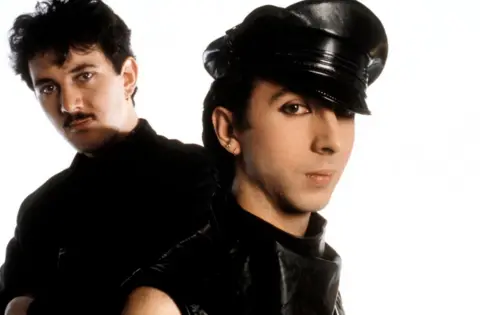
The talented musician, one half of the innovative 1980s electronic music band Soft Cell, has died at the age of 66.
Alongside vocalist Marc Almond, the duo achieved a worldwide hit with their cover of Gloria Jones' the classic track Tainted Love in 1984, and their debut album their initial full-length release is regarded as a seminal work of synth-pop.
He subsequently founded the innovative techno group The Grid, who secured popular acclaim with their 1994 single the hit Swamp Thing.
Ball died calmly in his rest at his home in London on Wednesday 22 October, only a short time after performing a featured performance with Soft Cell at the Rewind Festival in Henley-on-Thames.
Health Struggles
During that show, Ball appeared in a mobility chair, as he had for the previous couple of years, after a period of ill-health.
"I ended up damage myself quite a bit," he stated in 2023. "I fractured spinal bones in my spine and fractured about multiple ribs and broke my wrist."
After contracting a lung infection and suffering from sepsis, he was placed in an induced coma and stayed in hospital for seven months.
Nevertheless, he had been in "a great place emotionally" during the warmer months, as he worked on a new album with Almond, called Danceteria, which is scheduled for publication next year.
"He was focused and very pleased with the new album that we actually finished only a few days ago," stated the singer in a tribute.
"It's truly heartbreaking as next year was all set to be such an uplifting year for him, and I find comfort from the knowledge that he heard the completed album and believed that it was a great piece of work."
Tributes
Almond described his bandmate as "a wonderfully brilliant creative mastermind", stating: "He was the heart and soul of Soft Cell and I'm very proud of our legacy.
"Many thanks Dave for being an immense aspect of my life and for the songs you gave me. I wouldn't be where I am without your influence."
Richard Norris from The Grid, also paid tribute, recalling Ball's "constant humor" and "steadfast support".
"Being in a duo with someone is distinct from joining a group, the connection is incredibly close," he added.
"That's how it was with us. We went through so many remarkable, extraordinary, life-affirming moments as a team. Many thanks, Dave."
Formative Years
Brought into the world into a one-parent family in Chester in 1959, Ball was given up for adoption when he was a year and a half old.
He was raised in the seaside town with adoptive parents Donald and Brenda Ball, who changed his given name from his birth name to his adopted name, alongside his sibling his sister, who was also adopted.
He encountered Almond at an art college in the late 70s, where they were both learning fine arts. Fuelled by a shared love of a music genre, they established Soft Cell the very year, and quickly produced an extended play.
Musical Partnership
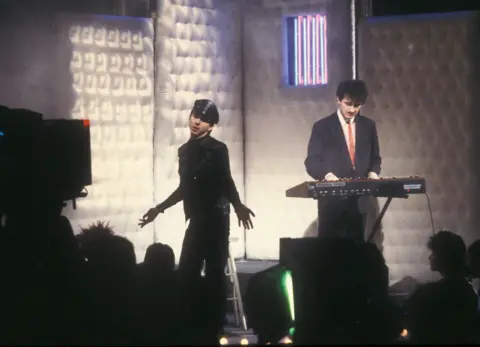
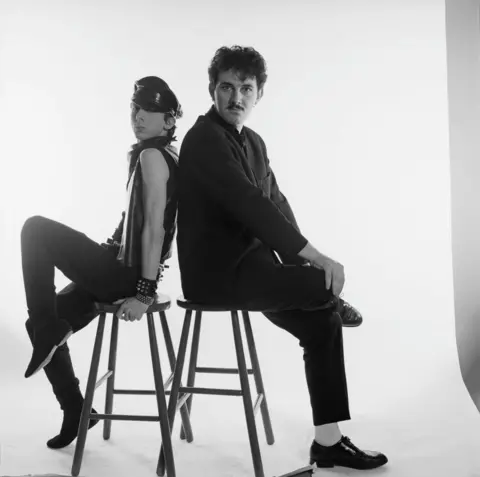
The pair were an distinctive pairing: Ball was the reserved musician, hunched over his keyboard, while Almond was a charismatic showman, all sparkle and makeup; but they attained a unique creative synergy.
Ball had developed a fascination with electronic instruments after watching Kraftwerk appear on BBC science show Tomorrow's World, and started to marry dark electronica to the catchy tunes Almond was composing.
Their signature song became the UK's second most popular single of 1981, shifting 21 million copies worldwide. Alongside hits by other artists, contemporary bands and electronic acts, it helped paved the path for the electronic music style of the 1980s.
The track was also included on their first album, their initial LP, which produced two further top five hits: Bedsitter and Say Hello, Wave Goodbye.
They followed the record up with the stand-alone single, Torch, which peaked at number two in the following year.
Career Highlights
Success had its upsides. "I enjoyed being able to afford my initial property, having money and exploring, which makes me sound like a Miss World," Ball not long ago told with a music magazine.
But it also presented challenges. "Sudden riches allowed we could afford newfound drugs to relieve the monotony" of media interviews and TV performances, Ball explained.
"I realize that's a common saying, but it's a truism for a valid cause, because it applies for so many bands."
Amidst the party-filled existence, the duo were also drifting apart, but they managed to create a follow-up classic album - the unconventional, tense and aptly-titled The Art Of Falling Apart.
They put out another album, their 1984 release This Last Night In Sodom, before dissolving the band to focus on individual endeavors.
Almond proceeded to have a prosperous solo career, featuring the top 10 hit Something's Got A Hold Of My Heart; while Ball formed The Grid, who mixed dance music with ambient pop over a enduring collaboration.
Reunions and Final Projects
Soft Cell reunited in the early 2000s, producing the charting record Cruelty Without Beauty.
Following another hiatus, they reappeared in recent years, releasing the original singles Northern Lights and Guilty (Cos I Say You Are) before performing what was supposed to be a farewell show at the large venue on 30 September, that year.
However, they remained together, creating their fifth album, Happiness Not Included, during the pandemic restrictions.
Ball recently characterized the band's upcoming release as a tribute to the NYC nightlife they visited while recording their initial records.
He noted that his time in hospital had influenced the group's music.
"I had unusual memories when I was coming and going of the hospital because I was on pain medication," he explained to a music magazine.
"Our latest tracks are a electronic representation of the sounds in my head from that time.
"In parallel, it's about the experiences me and Marc had in the 1980s."
The final mixes were completed only a short time before Ball died. It is due for release in the spring of 2026.


